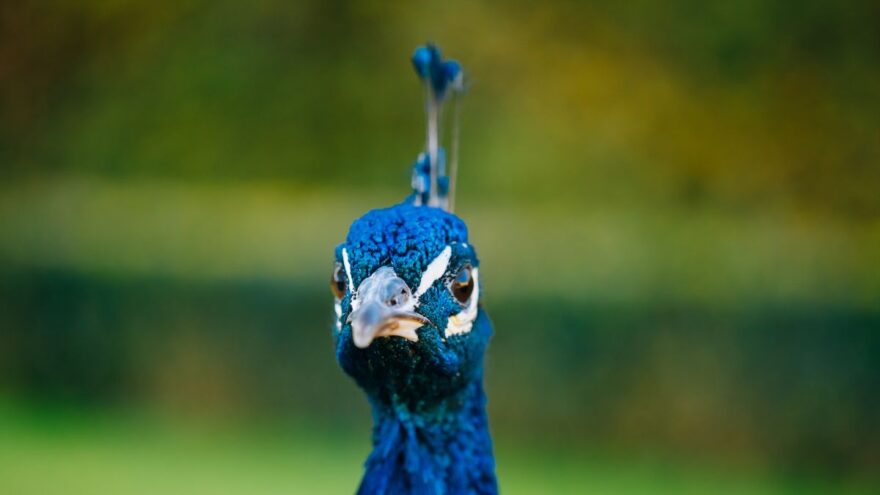
Invasive Birds of the Everglades and Exotic Birds of Florida
What Visitors Should Know Near Shark Valley
The Everglades hosts one of the most unique bird communities in North America. Visitors often expect to see iconic native species, like the Roseate Spoonbill, Great Blue Heron, Anhinga, and Snail Kite. Alongside these native residents, South Florida also supports a variety of exotic birds and invasive species that arrived through pet trade, ornamental introductions, or natural expansion.
While Shark Valley remains dominated by native birds and classic Everglades wildlife, understanding which non-native species occur in the region helps visitors see how changing ecosystems and human activity shape the South Florida landscape. (Learn more About the Everglades.)
What Makes a Bird Invasive in Florida
A bird is considered invasive when it meets all of the following:
- It is not historically native to Florida
- It arrived due to human assistance, intentional or accidental
- It maintains free breeding, self-sustaining populations
- Its presence affects native ecosystems or competes with native species
Some exotic birds remain localized in cities, while others have expanded into wetlands and natural habitats.
Major Invasive and Exotic Birds Linked To The Everglades
Below are the most recognized non-native species associated with the Everglades. Each includes detailed identification notes and realistic expectations about sightings near Shark Valley.
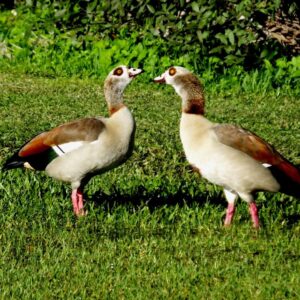
Egyptian Goose (Alopochen aegyptiaca)
Origin
Native to Africa, introduced into Florida from ornamental collections.
Appearance
A tan to buff goose with a dark brown chest spot and a distinctive dark patch around each eye. Wing feathers show bright white, chestnut, and green panels when the bird takes flight.
Diet and behavior
Grazes on grasses, aquatic vegetation, grains, and small invertebrates. Frequently seen near golf courses, retention ponds, and manicured landscapes.
Shark Valley likelihood
Uncommon. Possible near urban edges or canals along the approach roads but not expected along the Shark Valley Tram Tour loop.
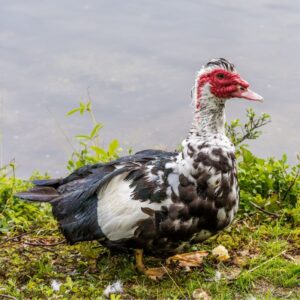
Muscovy Duck (Cairina moschata)
Origin
Native to Central and South America, but Florida populations come from domestic or feral stock.
Appearance
A large, chunky duck with dark feathers that may show green or purple iridescence. White patches on the wings are common. The red bumpy facial skin is the species’ most recognizable feature.
Diet and behavior
Feeds on aquatic plants, seeds, insects, and small invertebrates. Often associates with humans and may beg for food.
Shark Valley likelihood
Occasionally seen near human structures such as canals or parking areas, but not typical in the natural marsh or along the tram route.
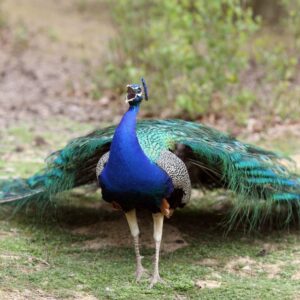
Indian Peafowl (Pavo cristatus)
Origin
Native to India and Sri Lanka. Introduced to Florida through private releases and ornamental keeping.
Appearance
Males are brilliant blue and green with a tall crest and a long, patterned tail train. Females are brown with green accents and lack the long train.
Diet and behavior
Eats insects, grains, berries, seeds, and small reptiles. Often found on private properties and ranchlands.
Shark Valley likelihood
Unlikely. Mostly seen in suburban neighborhoods and estate landscapes, not inside the marsh system.
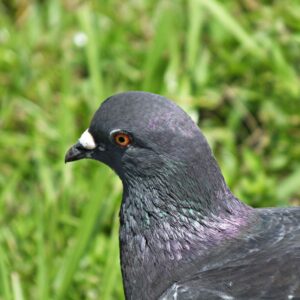
Rock Pigeon (Columba livia)
Origin
Native to Europe and western Asia. Introduced worldwide.
Appearance
Bluish gray with iridescent purple and green on the neck and two black wing bars. Feral pigeons appear in many color variations.
Diet and behavior
Feeds on grains, seeds, and human scraps. Strongly associated with buildings and bridges.
Shark Valley likelihood
Possible near the parking lot or visitor center but not part of the typical Shark Valley experience.
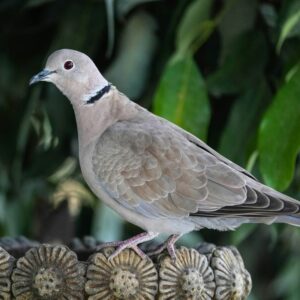
Eurasian Collared Dove (Streptopelia decaocto)
Origin
Native to Eurasia. Expanded across North America rapidly.
Appearance
A pale gray dove with a thin black collar on the back of its neck. Tail appears squared with white edging.
Diet and behavior
Forages on seeds and agricultural grain. Common in suburban and agricultural areas.
Shark Valley likelihood
May appear near Tamiami Trail or the visitor center but rarely seen deeper inside the Everglades.
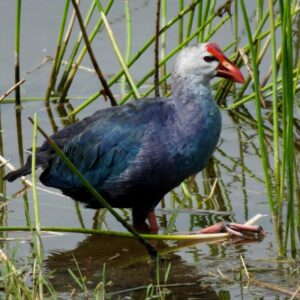
Gray Headed Swamphen (Porphyrio porphyrio)
Origin
Native to southern Asia and the Middle East. Established in Florida after escaped birds reproduced in the 1990s.
Appearance
A striking marsh bird with deep blue to purple plumage, a gray head, massive red bill and frontal shield, and long reddish legs with oversized toes.
Diet and behavior
Feeds heavily on aquatic vegetation along with shoots, seeds, insects, snails, and small vertebrates. Walks on floating plants and climbs through dense emergent marsh.
Shark Valley likelihood
The Gray Headed Swamphen is one of the very few exotic birds that has successfully colonized and reproduced within natural marsh habitats of the Everglades, not just developed edges. While it’s somewhat less common on the main Shark Valley loop (compared to manmade canals and water control areas), the chance of seeing one near Shark Valley is higher than for nearly all other exotics listed here. It remains far less predictable than native gallinules but is still a realistic regional sighting.
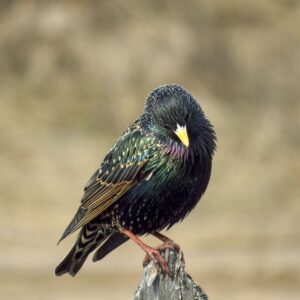
European Starling (Sturnus vulgaris)
Origin
Introduced from Europe in the late nineteenth century.
Appearance
Compact and short tailed with triangular wings. Shiny black with purple and green iridescence in breeding season. Speckled white in winter.
Diet and behavior
Eats insects, fruits, and seeds. Highly aggressive around nesting sites and forms large flocks.
Shark Valley likelihood
Occasional near urban edges but seldom seen within Shark Valley’s deep marsh interior.
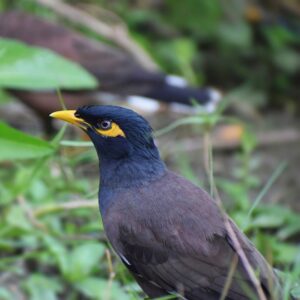
Common Myna (Acridotheres tristis)
Origin
Native to India and Southeast Asia. Introduced through escapes from the pet trade.
Appearance
Medium-sized brown bird with a black head, bright yellow eye skin, and a yellow bill and legs. Shows bold white patches in the wings during flight.
Diet and behavior
Forages in cities on insects, scraps, fruit, and small reptiles.
Shark Valley likelihood
Primarily an urban bird. Not expected inside Shark Valley.
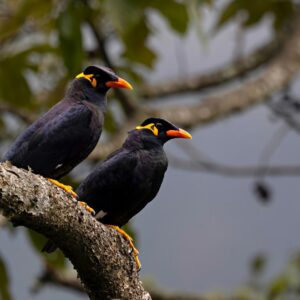
Common Hill Myna (Gracula religiosa)
Origin
Native to South and Southeast Asia. Present in Florida through escaped pets.
Appearance
Glossy black with metallic sheen, bright orange yellow bill and legs, and vivid yellow wattles rising from the nape behind the eye. Very bold white wing patches in flight.
Diet and behavior
Feeds on fruit, nectar, and insects. Popular videos on the Internet reveal their complex calls and mimicry, including an ability to mimic human voices and accents.
Shark Valley likelihood
Extremely unlikely. Prefers ornamental trees and suburban plantings, not the sawgrass marsh.
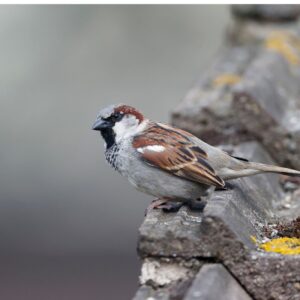
House Sparrow (Passer domesticus)
Origin
Native to Europe and western Asia and now widespread globally.
Appearance
Males show a gray crown, chestnut nape, black throat, and streaked brown back. Females and juveniles are plain buffy brown.
Diet and behavior
Feeds on seeds, grains, crumbs, and food scraps. Nests in crevices of buildings and signs.
Shark Valley likelihood
Occasional sightings around the visitor center but not along the marsh route where native Sparrow species dominate.

Monk Parakeet (Myiopsitta monachus)
Exotic Parrots And Parakeets In South Florida
Several exotic parrots now have self-sustaining populations in South Florida. While colorful and charismatic, they are rarely associated with the interior Everglades.
Monk Parakeet (Myiopsitta monachus)
Bright green with a pale gray face and chest. Builds large stick nests on utility structures. Common in Miami and suburban corridors but not typical at Shark Valley.
Budgerigar (Melopsittacus undulatus)
Small green and yellow parrot from Australia. Formerly more common but now scarce. Very unlikely at Shark Valley.
Yellow Chevroned Parakeet (Brotogeris chiriri) and Rose Ringed Parakeet (Psittacula krameri)
Both species are bright green urban birds that thrive in landscaped neighborhoods. Guests should not expect to see these inside the marsh habitat of Shark Valley.
What Visitors Typically See On The Shark Valley Tram Tour
Despite South Florida’s many exotic birds, Shark Valley remains one of the best places to see native Everglades wildlife including:
- Anhingas
- Double-crested Cormorants
- Great Blue Herons
- Great and Snowy Egrets
- White and Glossy Ibises
- Wood Storks
- Roseate Spoonbills
- Red Shouldered Hawks
- Turkey and Black Vultures
- Snail Kites
If you want to focus on native wildlife rather than exotics, explore our guide to the Must-See Birds of the Everglades that visitors can look for along the Shark Valley Tram Tour. You can also browse our gallery of Recent Wildlife Sightings to see a variety of animals, birds, and reptiles.
Frequently Asked Questions About Invasive Birds In The Everglades
Are there invasive birds in Everglades National Park?
Yes. Species such as Egyptian Geese, Muscovy Ducks, Gray Headed Swamphens, House Sparrows, and European Starlings occur in the region. Most remain near developed edges, not in the marsh interior.
Will I see invasive birds on the Shark Valley Tram Tour?
It’s unlikely. The tram loop is dominated by native wildlife. Exotic birds may appear near the visitor center or roads but are rarely part of the main tour experience.
What exotic birds are most common around South Florida?
Common Mynas, Monk Parakeets, Eurasian Collared Doves, Rock Pigeons, and House Sparrows are widespread in suburban and urban areas.
Are exotic parrots invasive in Florida?
Some, like Monk Parakeets and Rose Ringed Parakeets, have established breeding populations. They usually spotted near cities rather than near our Everglades marshes.
How do invasive birds affect native Everglades wildlife?
They may compete for nest sites, alter plant communities, disrupt food webs, and introduce new pressures on already sensitive native species.
How can visitors help protect native birds?
Avoid feeding wildlife, keep distance from nesting birds, report unusual sightings, and learn to distinguish native species from exotics.
Learn more about Shark Valley and the importance of our Education Ecotours.